Published on · By GREATER
Your first BJJ class: what to bring and what to expect
A first Brazilian jiu-jitsu (BJJ) class feels bigger in your head than it is on the mat. Wear the right clothes, turn up clean with short nails and tell the instructor it is your first day. Here is what to pack, how a session usually runs and how to deal with the usual worries.
What to bring to your first class
Before you go, ask the academy whether they can lend you a gi or whether the trial class is no-gi. Every academy does it differently. Once you know, pack the following:
- Training clothes. If the class is in the gi and you don't own one, ask if they can lend you one. If they say sportswear is fine, bring a fitted top (ideally a rash guard) and shorts or leggings with no pockets, zips or buttons.
- Flip-flops or sliders. For walking off the mat (changing room, toilet) so you never step on it in outdoor shoes.
- Water and your own towel. Towels are not for sharing.
- A hair tie if you have long hair.
- Clean clothes to change into and a bag for the sweaty ones.
- A mouthguard, if you have one. It is rarely compulsory in a beginners' class, but many students wear one.
Leave rings, earrings, watches and piercings at home: they catch and they hurt. If you later buy a gi and want to compete, note that the IBJJF requires cotton or cotton-like fabric in a single colour: white, royal blue or black.
Hygiene before you step on the mat
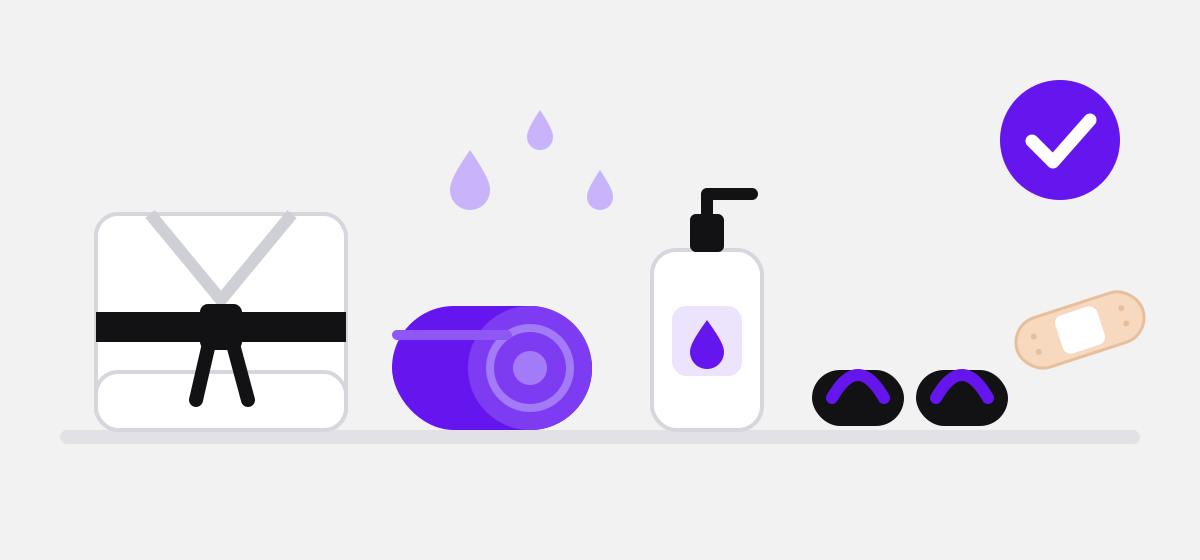
Jiu-jitsu means skin-to-skin contact for the whole class, so hygiene is part of training. The US CDC advice for athletes and the NHS guidance on ringworm agree on the basics:
- Wash your hands often and shower as soon as you finish training.
- Don't share towels, razors or clothing.
- Cover cuts and wounds with a clean, dry dressing until they heal.
- Wash your gi or kit after every class. Don't leave it damp in your bag.
- If you notice a patch, a pus-filled spot or a rash, don't train and tell your instructor. See a doctor or pharmacist.
Add what nearly every academy asks for: short, clean fingernails and toenails, and no walking barefoot from the toilet onto the mat. There is more detail in our guide to BJJ skin infections.
How a typical class works

Every instructor has their own style, but most classes follow four stages:
- Warm-up. Mobility, movement drills on the floor and jiu-jitsu specific exercises such as the shrimp (hip escape) or breakfalls.
- Technique. The instructor shows one or more moves and you repeat them in pairs, slowly and without resistance.
- Positional drills. You practise what you learnt from a set position, with some resistance.
- Free sparring (rolling). You grapple at a controlled pace with a partner. At many academies beginners don't roll on day one, or they roll with an experienced student. If you don't feel ready, say so. That is normal.
There is usually a bow or a short greeting at the start and the end. Watch what others do and follow along. Nobody expects you to know mat etiquette on your first day.
The tap: the most important safety rule
In jiu-jitsu you submit by tapping your partner or the mat with your hand, or by saying "tap" out loud if your hands are trapped. As soon as your partner taps, you let go. No arguing and no squeezing "a bit more".
- Tap early. One tap too many is better than an injury.
- If something hurts, even if it isn't a submission, stop and say so.
- Tell the instructor about any injury or health issue before you start. If you are unsure whether you can train, ask your doctor first.
Common worries (and what to do about them)

"I'm not fit enough." Fitness comes from training. Nobody will expect you to keep up with someone who has years on the mat. Rest when you need to and drink water.
"I'll get hurt." At a good academy, experienced partners control their strength with newcomers. That is what the tap is for. If you ever feel uncomfortable with someone, tell the instructor.
"I'll look silly." Every black belt had a clumsy first day. Getting techniques wrong is part of learning. Ask about anything you don't understand.
"It's very close contact." That feels odd at first. Good hygiene from everyone helps a lot, and after a few classes the contact simply becomes part of the game.
After your first class
You will probably be sore the next day, especially in your neck, forearms and core. Wash your kit, drink water and rest. If you enjoyed it, consistency is what helps most: two or three classes a week that you can keep up beat one intense week followed by nothing.
You will start as a white belt. If you are curious about how grading works, read our guide to BJJ belts. And before your second class, go over the basic BJJ positions: what the instructor says will make much more sense.
Frequently asked questions
Do I need to buy a gi before trying a class?
No. Ask the academy: many lend one for the trial class or let you train in fitted sportswear with no pockets.
Do I have to roll on day one?
It depends on the academy. If you don't feel ready, say so and nobody will make you. If you do roll, keep it gentle and pick an experienced partner.
Can I train with a cut or a mark on my skin?
A small wound that is well covered with a clean dressing is usually fine. If it is a patch, a rash or a pus-filled spot, don't train, tell your instructor and see a doctor or pharmacist.
Can I start BJJ at 30 or 40?
Yes, you can start jiu-jitsu as an adult. Tell the instructor where you are starting from, go at your own pace, tap early and rest as much as you need. If you have an injury or a health issue, ask your doctor before you start.
Sources
If you run an academy and want new students to book their trial class from their phone, take a look at GREATER.